
News
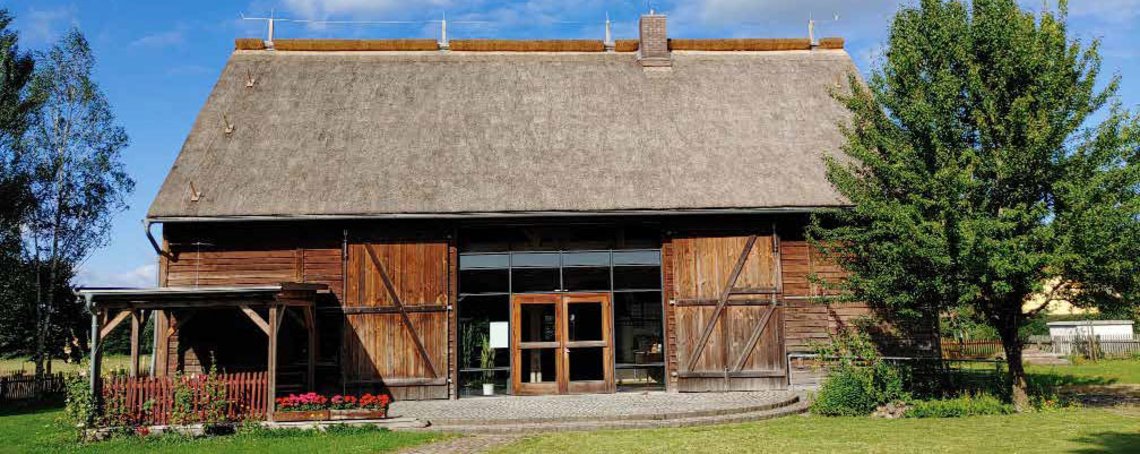
The Wolhynian Resettlers Museum invites you to a reading by author Eleonora Hummel, who will read from her novels ‘The Fish of Berlin’ and ‘Venus in the Window’. Her work focuses on the history of Russian-Germans who resettled from Kazakhstan to the GDR during the Soviet era.
Date: Saturday, October 24, 2026
Time: 3:00 p.m.
Location: Wolhynian Resettlers Museum, Kiether Str. 2, 18292 Linstow
In ‘The Fish of Berlin’, the narrator Alina sets out to uncover a secret from the Stalin era surrounding her taciturn grandfather. In ‘The Venus in the Window’, the author explores the fate of a woman whose life was shaped by deportation, forced labour and the NKVD’s special command. In her novels, Eleonora Hummel unfolds the eventful story of a Russian-German family who emigrated to the GDR in the 1980s with high hopes, only to be brought down to earth by harsh reality.
In a talk with the audience, the author discusses settling into a new home and explores the question: what does it take to put down roots in a new place? Eleonora Hummel was born in 1970 in Zelinograd, Kazakhstan. In 1980, she moved with her family to the North Caucasus and settled in Dresden two years later.
The event is sponsored by the Federal Government Commissioner for Matters Relating to Ethnic German Resettlers and National Minorities, as well as by the Cultural Office for Russian-Germans, with funding from the Federal Ministry of the Interior. Admission is free.


The Linstow Local History Society warmly invites you to the 34th Museum Festival in Linstow. Under the theme ‘From Volhynia to the wider world – the settlement of German farmers in the Baltic States’, a varied programme awaits our guests from 4 September 2026 to 6 September 2026.
Friday, 4 September 2026
5.30 pm Welcome with musical accompaniment
6.00 pm From Volhynia to the wider world – the settlement of German farmers in the Baltic States with Dr Ron Hellfritzsch and Dr Kaisa Langer
Saturday, 5 September 2026
2.00 pm Museum festival with cultural programme
4.00 pm Ukrainian choir ‘Smetana’ from Stralsund
Sunday, 6 September 2026
10.00 am Local church service at Kieth Church
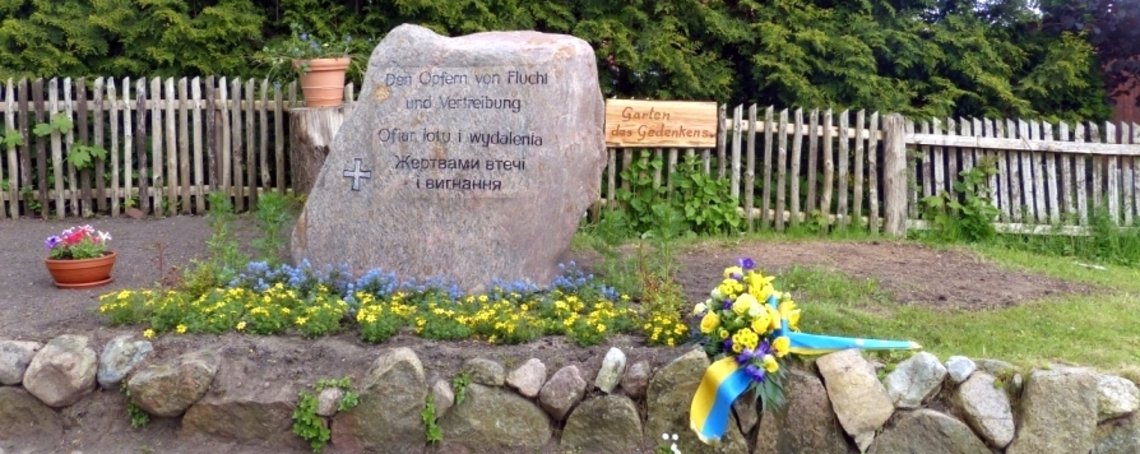
12.00 pm Memorial service for the victims of flight and expulsion in the Garden of Remembrance
The starting point is a until now little-known aspect of the eventful migration history of the Volhynian Germans. From 1906 onwards, several thousand farmers migrated on from Volhynia to the Baltic states. On Friday, 4 September 2026, Dr Ron Hellfritzsch and Dr Kaisa Langer will take us on a journey through time to Latvia and Estonia, a journey that, for many settlers and their descendants, ended in 1945 with their flight to Germany.
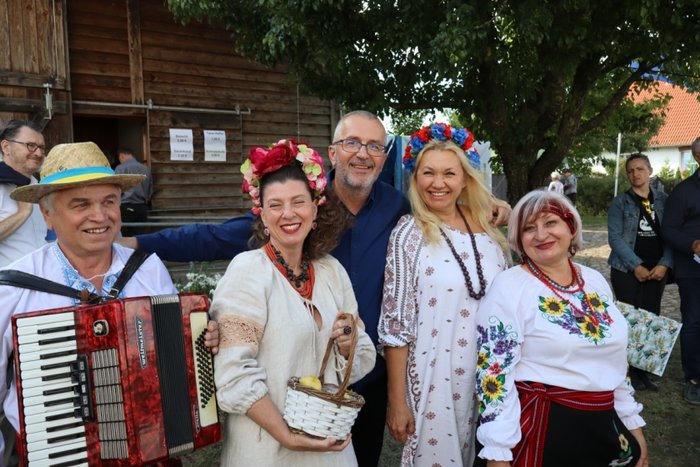
On Saturday, 5 September 2026, we would like to celebrate the successes of our museum’s work together with you, with music, dancing, a raffle and Volhynian specialities, whilst providing an opportunity for stimulating conversations and an exchange of views. We are particularly looking forward to the Ukrainian choir ‘Smetana’ from Stralsund. Nearly 30 singers will be inviting you to dance to a mix of traditional and modern songs. On Sunday, 6 September 2026, we will celebrate our church service at Kieth Church with guests from Germany and abroad. Afterwards, we would like to gather in the Garden of Remembrance for a solemn memorial service in honour of all victims of flight and expulsion.
You are warmly welcome to the 34th Museum Festival – come and celebrate with us in Linstow.
To mark the day of remembrance for the victims of flight and expulsion, the Wolhynian Resettlement Museum invites you to a lecture titled “The Forced Resettlements from the GDR Border Region along the Inner-German Border in 1952” with Rainer Potratz.
Date: Friday, June 19, 2026
Time: 6:00 p.m.
Location: Wolhynian Resettlement Museum, Kiether Str. 2, 18292 Linstow
On May 26, 1952, the GDR Council of Ministers adopted a new border regime for the border with the Federal Republic of Germany. Over 8,000 people, who were considered politically unreliable for various reasons, were deported against their will and without prior notice to the interior of the GDR. They were resettled in the hinterland under conditions that were at times inhumane. The reasons for their forced resettlement remained largely unknown to those affected. In nearly all villages near the border, from the Baltic Sea to the border triangle near Hof, people were affected by this coercive measure.
In his lecture, Rainer Potratz describes the historical background, the process, and the consequences for the victims. He provides an overview of the forced resettlements following the construction of the Berlin Wall on October 3, 1961, and of subsequent individual resettlements. Furthermore, he describes the difficulties faced by the victims in having their experiences of persecution recognized in the Federal Republic of Germany since the 1990s. Eyewitnesses from Mecklenburg will also share their stories.
Rainer Potratz is a historian who has been researching the GDR’s border regime for many years. Most recently, he served as an advisor to the State Commissioner of Brandenburg for Coming to Terms with the Legacy of the Communist Dictatorship.
The event is sponsored by Landeszentrale für politische Bildung Meckelburg-Vorpommern. Admission is free.


To kick off the summer season, the Volhynian Resettlers Museum invites you to the musical and literary program ‘What Remains’ featuring Katharina Martin-Virolainen and Oleg von Riesen.
Date: Sunday, May 3, 2026
Time: 3:00 p.m.
Location: Volhynian Resettlement Museum, Kiether Str. 2, 18292 Linstow
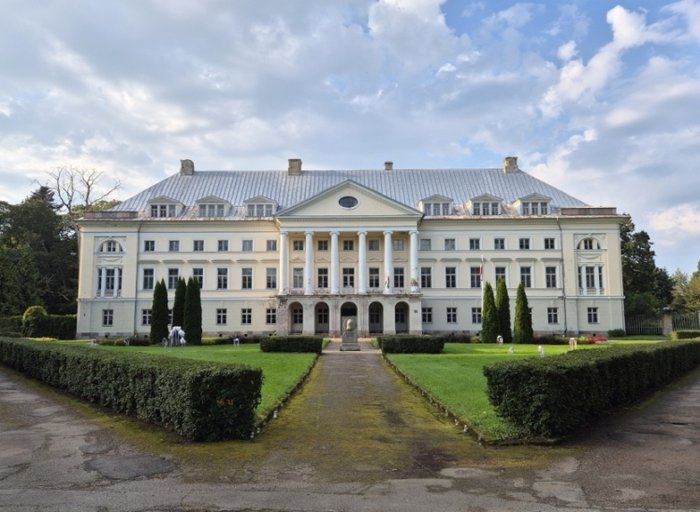
From Volhynia to Siberia, along the Danube to Bessarabia, from the heights of the Carpathians to the vineyards of the Caucasus—in many places, there are still numerous signs of former German settlement. An abandoned half-timbered house, the ruins of an old church, a forgotten gravestone in the cemetery, or a lone apple tree in the middle of a field bear witness to a world that has been lost.
Between 2018 and 2025, Katharina Martin-Virolainen and Oleg von Riesen traveled through eleven countries in search of traces of the history of German minorities. They visited former German villages, places of exile, museums, and memorial sites. They spoke with eyewitnesses and dedicated individuals who continue to preserve the legacy of the past to this day.
They documented their search for traces through photographs and videos and processed their experiences into sensitive texts and songs. With their multimedia program, the two artists invite the audience on a journey through time and speak about what remains when seemingly nothing is left.
The author Katharina Martin-Virolainen was born in East Karelia. She is the founder and director of “Meine Leute,” a theater dedicated to the history of displaced persons and ethnic German repatriates, in Eppingen. For many years, she has been exploring the history and culture of German minorities—including those in the former Soviet republics—through artistic projects. Composer Oleg von Riesen was born in Kazakhstan. In addition to his own compositions, he sets poems by artists such as Nora Pfeffer, Valeria Koch, Gerhard Hauptmann, and Gertrud von den Brincken to music.
Coffee and cake will be served. Admission is free. Donations to support the museum’s work are appreciated.

